
Reviewed by Dr. Jared Nabeta, General Dentist (DDS)
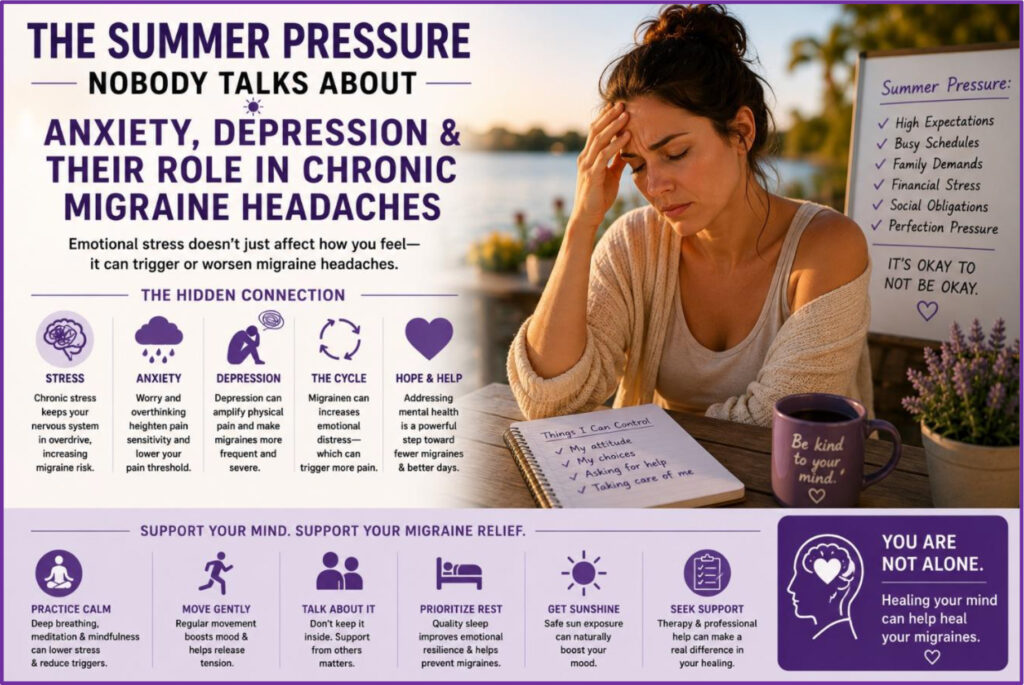
Summer is supposed to be the season of joy, but for many people living with migraine, it brings a very specific and underacknowledged kind of pressure. The expectation to be social, spontaneous, and carefree collides with the reality of a neurological condition that demands routine, predictability, and rest. That collision fuels anxiety and depression, and both conditions are deeply, biologically linked to migraine headache attacks in ways that create a vicious cycle that can be extremely difficult to break.
The relationship between migraine and mental health is not simply about stress. Anxiety, depression, and migraine share overlapping neurological mechanisms, particularly in how they affect serotonin regulation and the brain’s pain-processing pathways. People with migraine are two to three times more likely to experience anxiety and depression than those without migraine, and the conditions reinforce each other: heightened anxiety increases migraine frequency, and more frequent migraine attacks deepen feelings of helplessness, isolation, and low mood.
HOW SUMMER AMPLIFIES THE MIGRAINE-MENTAL HEALTH CYCLE
SUMMER-SPECIFIC MENTAL HEALTH MIGRAINE DRIVERS
● Social pressure & fear of canceling plans ● Financial stress from summer expenses ● Anticipatory anxiety before events ● Guilt from missing family activities ● Isolation from withdrawing due to migraine ● Reduced routine increasing vulnerability
Summer’s social calendar intensifies this dynamic. Every barbecue, family gathering, or vacation becomes a source of anticipatory anxiety, will a migraine headache attack strike today? Will I have to cancel again? The fear of an attack often produces as much cortisol as the attack itself, and cortisol is one of the most well-documented neurological migraine triggers. For many sufferers, the dread between attacks becomes as disabling as the attacks themselves.
Managing this cycle requires addressing both sides simultaneously. Mindfulness-based practices, consistent sleep, gentle daily exercise, and clear communication with loved ones about migraine’s realities all help break the reinforcing loop.
To book a consultation, call Nabeta Dentistry at (905) 639-6701 or request an appointment online at NabetaDentistry.com/appointment-request. Dr. Jared Nabeta, General Dentist, assesses jaw pain and TMD, including headache related to TMD. Treatment for migraine is offered only for migraine diagnosed by a physician, alongside the patient’s physician.