
Snoring Treatment in Burlington
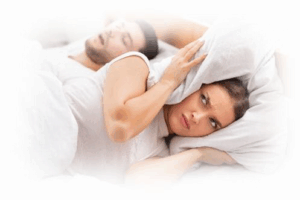 Snoring happens when soft tissues in the throat vibrate as air moves through a narrowed airway during sleep, and it can have several causes. At a snoring consultation, our general dentists, Dr. Jared Nabeta, Dr. Richard Nabeta and Dr. Kaitlin McCann, look at what may be contributing and, for suitable patients whose soft palate is part of the cause, offer an in-office, non-surgical CO2 laser snoring treatment. If anything suggests you should see your physician first, we will tell you.
Why People Snore
During sleep, the muscles that help keep the airway open naturally relax. If the airway becomes narrower, moving air can make the surrounding tissues vibrate. Several factors can contribute at the same time:
- Nasal congestion from a cold, allergies or structural blockage
- Sleeping on the back, which can allow the tongue and soft tissues to move toward the airway
- Alcohol or sedating medication, which may increase muscle relaxation
- Changes in muscle tone and soft tissue that occur with age
- Body weight and the distribution of tissue around the neck and airway
- The shape and position of the jaw, tongue, palate or other airway structures
- Sleep-disordered breathing, including obstructive sleep apnea
Persistent snoring can affect more than the person making the sound. Partners may have difficulty falling asleep, wake up repeatedly or begin sleeping in separate rooms. Poor sleep can contribute to irritability, difficulty concentrating and lower daytime energy.
For background reading, see recent research on snoring vibration and upper-airway muscle in our research library.
Is It Snoring or Sleep Apnea?
Snoring and obstructive sleep apnea are related, but they are not the same condition. Snoring is the sound created when tissues vibrate. Obstructive sleep apnea involves repeated reductions or pauses in breathing during sleep.
| Snoring | Possible obstructive sleep apnea |
|---|---|
| Airway tissues vibrate and create sound. | Breathing repeatedly decreases or stops during sleep. |
| May occur without breathing pauses. | A partner may notice pauses followed by gasping or choking. |
| Can disturb the snorer’s or partner’s sleep. | Can cause fragmented sleep and marked daytime sleepiness. |
| May respond to changes in position, habits or targeted treatment. | Requires medical assessment and an appropriate treatment plan. |
Warning Signs
Snoring itself does not prove that someone has sleep apnea. Snoring accompanied by any of these signs may point to obstructive sleep apnea, and the signs are worth discussing with your family physician.
| During sleep | During the day | Health and safety |
|---|---|---|
| Breathing pauses noticed by a partner | Severe or persistent daytime sleepiness | High blood pressure or other cardiovascular concerns |
| Gasping, choking or abrupt awakenings | Morning headaches or waking with a dry mouth | Drowsiness while driving or performing safety-sensitive work* |
| Loud, persistent snoring | Difficulty with memory or concentration, or changes in mood |
*Drowsy driving is a safety concern. Contact a medical provider promptly and avoid driving when sleepy.
How Our Burlington Dentists Can Help
We do not screen for, diagnose or treat sleep apnea, and we do not provide oral appliances of any kind. Sleep apnea is assessed and diagnosed by a physician. Our role is CO2 laser treatment for snoring only.
- Snoring consultation at our office. We discuss your snoring, sleep concerns, health history and previous attempts to manage snoring, and examine the nose, mouth, throat and jaw structures that may be contributing.
- Your physician’s assessment. If you have any of the signs above, please see your physician before snoring treatment. A physician or sleep-care provider decides whether a home or laboratory sleep study is appropriate.
- Diagnosis guides the plan. If sleep apnea is suspected or confirmed, complete that medical step first; any snoring treatment is then planned with your physician’s input. A snoring treatment should not be used to mask symptoms of possible sleep apnea.
Common Solutions to Snoring
There is no single treatment for every person who snores. Which option fits depends on the cause of your snoring and whether sleep apnea has been ruled out. Results vary from person to person.
| Option | What it involves | Who provides it |
|---|---|---|
| Lifestyle changes | Sleep position, limiting alcohol before bed, weight management | You, with your family physician |
| Nasal strips or allergy treatment | Over-the-counter or prescribed products for nasal congestion | Pharmacist or physician |
| Oral appliance (mouthpiece) | Custom device worn at night | Not offered at our office |
| CPAP and other sleep apnea care | Prescribed after a sleep apnea diagnosis | Physician or sleep-care provider |
| Surgery or other procedures | For example, nose or throat procedures | ENT physician |
| CO2 laser treatment of the soft palate | 6 short in-office visits about a month apart, then occasional top-ups | Nabeta Dentistry, for suitable patients |
CO2 Laser Treatment for Snoring
For selected patients whose snoring appears related to the soft palate, and who have no signs that call for a physician’s assessment first, we offer an in-office, non-surgical treatment with a fractional CO2 laser. It is a treatment for snoring, not for sleep apnea. Learn what CO2 laser snoring treatment involves →
Wondering about laser snoring treatment? Request a snoring consultation. If you have signs that need a physician’s assessment, we’ll suggest you see your physician first.
Frequently Asked Questions
Is snoring always a health problem?
No. Many people snore without any other health concern. Snoring is more of a concern when a partner notices pauses in breathing or gasping, or when you are very sleepy during the day. If so, see your physician first.
Why has my snoring become worse?
Congestion, weight changes, alcohol use, medication, sleeping position and age-related tissue changes can all affect snoring. A consultation can help identify which factors may be relevant.
When should I see my physician about snoring?
If a partner notices pauses in breathing or gasping, if you wake up choking, or if you are very sleepy during the day, see your physician. These signs need a medical assessment, which we do not provide.
Can laser treatment help my snoring?
It may be an option when the soft palate is part of the cause. Response varies from person to person, and no result can be promised. Our CO2 laser snoring treatment page explains what is involved.
Do anti-snoring products work?
Some can help, but it depends on what is causing the snoring. Store-bought nasal strips and sprays may help certain people for a time, but they do not address every cause. An assessment can help before you choose a treatment.
Do I need a referral for a snoring consultation?
No. You can request a snoring consultation directly by calling 905-639-6701. If your physician is already involved in your sleep care, we work alongside them.
Request a Snoring Consultation: call 905-639-6701 or send us a message.
Please don’t include health information in this form; we’ll ask at your appointment. By sending this form you agree to be contacted by Nabeta Dentistry about your request.